
Zebra ZT610 Label Printer for Demanding Workflows


What Can We Help You With?
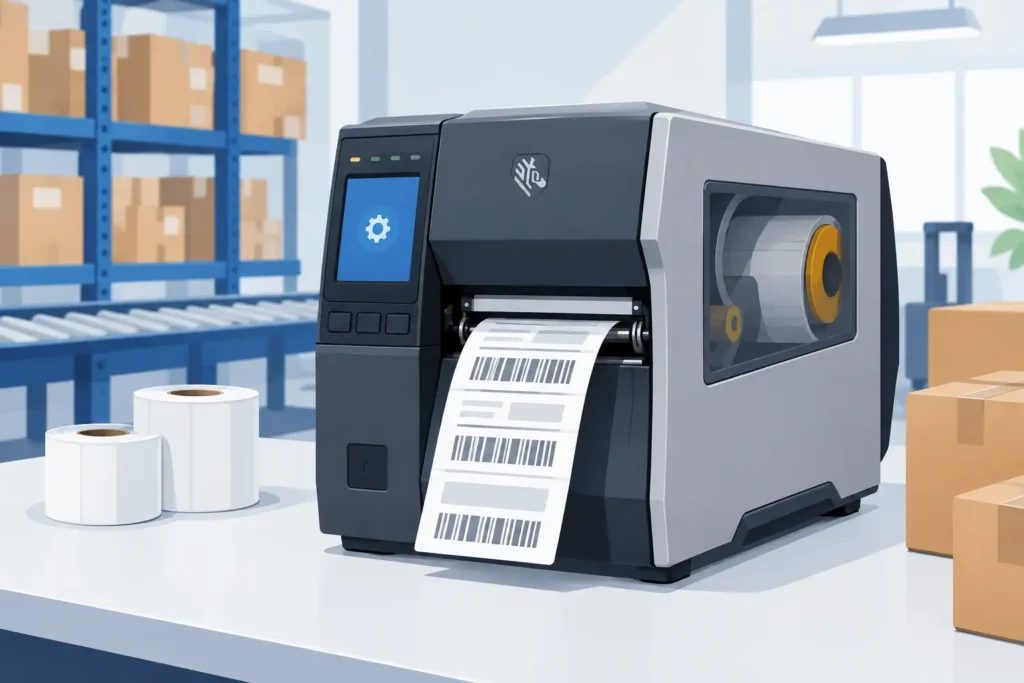
A label printer becomes a production issue when it cannot keep pace with the line, produce readable barcodes, or withstand the conditions around it. The Zebra ZT610 label printer is built for operations where label output is directly tied to inventory accuracy, shipment flow, compliance, and product traceability. It is not an office printer adapted for warehouse work. It is an industrial platform intended for high-volume, high-resolution labeling in demanding environments.
For organizations replacing aging equipment, adding capacity, or standardizing labels across multiple facilities, the printer itself is only one part of the decision. Print resolution, media selection, ribbon performance, connectivity, software integration, and service planning all affect whether the system performs reliably day after day.
Where the Zebra ZT610 Label Printer Fits Best
The Zebra ZT610 is a 4-inch industrial thermal transfer printer designed for applications that require durable labels, precise print quality, and consistent output. It is particularly well suited to operations printing smaller labels, dense barcodes, detailed product information, or variable data at scale.
Common applications include work-in-process tracking, asset identification, electronics labeling, pharmaceutical and laboratory labeling, retail and compliance labels, warehouse bin labels, and product labels with serialized barcodes. Its available print resolutions, including high-resolution options, make it a practical choice when barcode density or small text becomes difficult for lower-resolution industrial printers.
That does not mean every operation needs this level of capability. A facility producing large shipping labels with simple text and standard barcodes may be better served by a less specialized printer. The ZT610 makes the most sense when print detail, duty cycle, and long-term industrial reliability carry real operational value.
Print Resolution Is an Operational Decision
Resolution is often treated as a technical specification, but it has direct consequences for scan performance and label usability. A low-density barcode may print acceptably at a standard resolution. A small 2D barcode, intricate compliance label, or compact electronics label may not.
The ZT610 is available in multiple resolution configurations, allowing buyers to align print quality with the label design. Higher resolution supports sharper small text, fine graphics, and dense barcode symbologies. However, it can also affect print speed and may not be necessary for every application.
A practical selection process starts with the smallest barcode, text size, and label dimensions your operation must support. It should also account for the scanners used downstream. A barcode that looks clear to the eye can still fail verification or scan inconsistently if the media, ribbon, darkness setting, or printhead resolution is not appropriate.
Before standardizing a printer, test representative label formats under actual operating conditions. Include variable data, real barcode content, and the label stock intended for production. This is especially important for labels that will be scanned after exposure to abrasion, cold storage, chemicals, moisture, or outdoor conditions.
Media and Ribbon Choices Matter as Much as Hardware
Industrial printer performance depends on using the correct combination of label material, adhesive, ribbon, and print settings. A capable printer cannot compensate for a label construction that is poorly matched to its environment.
For example, a paper label may work well for short-term carton identification in a dry warehouse. It may fail quickly on a reusable tote, metal asset, refrigerated product, or item exposed to solvents. In those cases, a synthetic facestock, more aggressive adhesive, and compatible thermal transfer ribbon may be required.
The same principle applies to print durability. Wax ribbons are often appropriate for coated paper labels and general-purpose applications. Wax-resin and resin ribbons provide greater resistance to smudging, scratching, heat, and chemicals when paired with compatible materials. The correct choice depends on the substrate and the exposure the label will face after printing.
This is where a complete labeling assessment can prevent recurring failures. Rather than selecting a printer, labels, and ribbons independently, evaluate them as one system. The result is more dependable print quality, less waste, fewer reprints, and less unplanned troubleshooting on the floor.
Integration Should Be Planned Before Installation
The Zebra ZT610 can support networked, USB, serial, and other connectivity requirements depending on the configuration. For many businesses, the larger question is not how the printer connects, but what system will control the data sent to it.
A warehouse may print shipping, pallet, and location labels from its warehouse management system. A manufacturing operation may trigger product or work-order labels from an ERP or manufacturing execution system. A laboratory may require controlled templates and serialized information from a database. Each workflow needs a clear approach to label design, data mapping, printer configuration, and user access.
Poor integration can turn a capable printer into a source of manual work. Employees may be forced to type data, choose the wrong template, print outdated formats, or apply labels inconsistently. Those errors create downstream problems in receiving, inventory, shipping, traceability, and customer compliance.
A stronger implementation defines the label formats, data sources, naming conventions, and print triggers before deployment. It also identifies who owns printer settings and template changes. For multi-site operations, this level of control helps keep labeling consistent across locations rather than allowing each facility to develop its own version of the process.
Consider Operator Use on the Floor
Industrial equipment should be usable by the people responsible for keeping production moving. The ZT610 includes a color touch display intended to make configuration and status information easier to manage, but standard operating procedures are still necessary.
Operators should know how to load media and ribbons, recognize common alerts, clean the printhead, and identify when a label issue is caused by media versus printer settings. Maintenance teams should have a planned schedule for cleaning, inspection, and replacement of wear components. Procurement should have approved consumables available before they become an emergency order.
Those details may sound basic, but they are frequently the difference between reliable printing and repeated downtime.
Planning for Service Life and Uptime
The ZT610 is designed for industrial workloads, yet every thermal transfer printer has components that require attention. Printheads wear over time, particularly when media is abrasive, darkness settings are too high, or routine cleaning is skipped. Rollers, sensors, and mechanical assemblies also benefit from periodic inspection.
A preventive approach protects label quality and controls cost. Watch for fading print, voids in barcodes, inconsistent darkness, wrinkled ribbon, drifting registration, or repeated sensor errors. Addressing these signals early is usually easier than waiting for a production-critical failure.
Keep the required label and ribbon specifications documented for each application. Standardizing approved consumables prevents well-intentioned substitutions that can cause poor adhesion, barcode failures, excess printhead wear, or ribbon compatibility issues. It also simplifies reordering and training.
For organizations with multiple printers, establish a replacement plan instead of waiting until equipment fails. Consider printer age, print volume, repair history, application changes, and the cost of downtime. A spare printer may be justified in high-volume shipping or production areas where a single device outage can hold up an entire shift.
Questions to Ask Before Choosing a Configuration
Before purchasing a Zebra ZT610 label printer, operations and IT teams should agree on the practical requirements: the widest label needed, smallest barcode or text size, daily print volume, print speed expectations, label materials, environmental exposure, required connectivity, and the software or business systems that will generate labels.
Also consider future requirements. A printer that meets current shipping needs may be asked later to support serialized compliance labels, RFID workflows, new customer label formats, or higher-density product identification. Building some flexibility into the selection can prevent a premature replacement.
The right configuration is not always the one with the highest specifications. It is the one that supports the actual label application with enough capacity, print quality, and integration capability to keep the operation moving. Working with an experienced labeling partner such as PaladinID can help teams evaluate the printer alongside the labels, ribbons, software, and support processes that determine long-term performance.
A dependable labeling system should make identification work less visible, not more. When the printer, media, data, and maintenance plan are aligned, labels scan correctly, operators spend less time correcting exceptions, and the operation can focus on moving product rather than managing printer problems.


Got Labeling Questions? Our AI Assistant Has Answers - Chat Now!
For more information on PaladinID
Get Help With Your Next Label Project
We have over 35 years of providing exceptional service and labeling products to the world. Take the first step to an easy, stress-free solution for your label needs by contacting us.
Schedule a call below or email [email protected]
Make Your Mark
“Making companies more competitive by offering the correct label printing solution, on time, within budget, while creating unmatched value”.
About PaladinID, LLC
PaladinID develops and supports high-performance barcode labeling applications. We work with our clients to “Make Your Mark” by providing the expertise and tools necessary to create an entire product label printing solution. Located in central New Hampshire, PaladinID has been serving Massachusetts, Vermont, Maine, Connecticut, Rhode Island, New England, and beyond for over 30 years, and in 2017, became an RFID-certified company. We look forward to working with you.
You may be interested in our other services:
Product Labels
Product Labels
Labels for every type of application: Blank, Pre-printed, Variable data
Label Printers
Label Printers
We sell and support: Direct/thermal transfer, Inkjet, Laser
Printer Ribbons
Printer Ribbons
We sell ribbons for ALL barcode printers including: Zebra, Datamax, Sato, Intermec
Flexible Packaging
Flexible Packaging
We offer a wide variety of packaging containers for your products.
Label Software
Label Software
Software for all barcode printing and product labeling.
Label applicators
Label Applicators
Wide selection of applicators: Desktop/Mobile, Applicator only, Print & apply
