
Warehouse Labeling System Guide




What Can We Help You With?
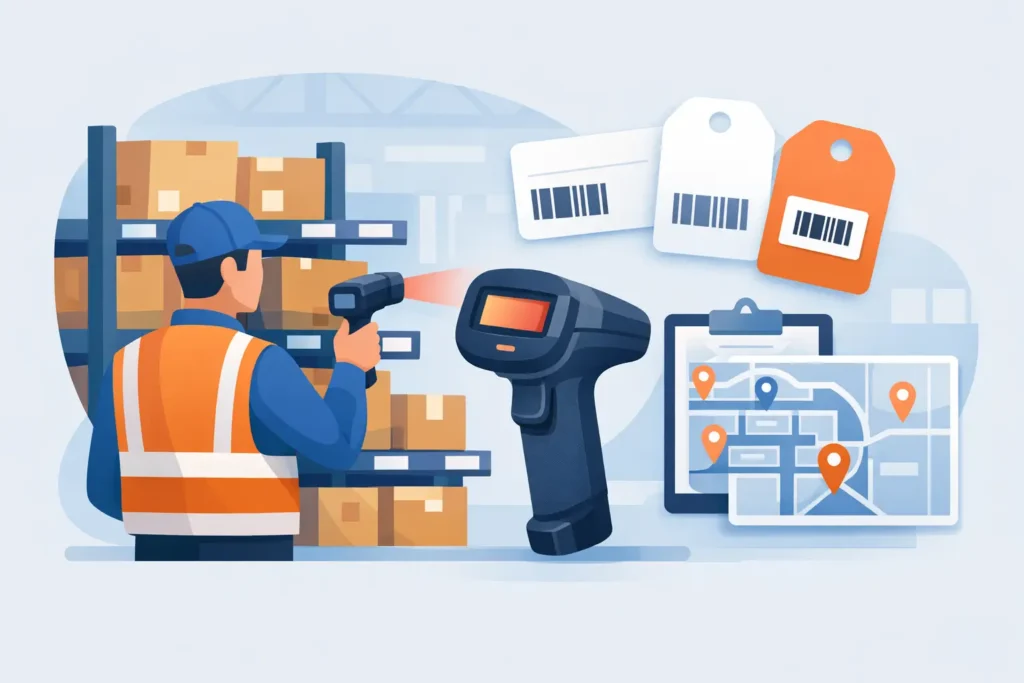
A picker loses 20 minutes looking for a pallet that the system says is in A-17. Receiving prints one label format, shipping uses another, and replenishment relies on handwritten rack markers that faded months ago. That is usually where a warehouse labeling system guide becomes useful – not as a branding exercise, but as an operations fix.
In most facilities, labeling problems show up as inventory errors, slow travel paths, rescans, chargebacks, and avoidable labor costs. The label itself is only one part of the issue. The real system includes location logic, barcode design, print quality, material durability, software rules, and label application and use on the floor. If one part is weak, the entire process feels unreliable.
What a warehouse labeling system guide should actually cover
A good warehouse labeling system guide starts with the site’s operating reality. It should account for how products move, where they pause, who scans them, and the conditions labels must withstand. A small regional warehouse with static shelving needs a different setup than a high-volume DC with cross-docking, rack replenishment, and multiple shift teams.
That is why copying another facility’s label format rarely works for long. You might match the visual layout, but still miss barcode symbology requirements, adhesive performance, print durability, or software integration details. Warehouses do not fail because they lack labels. They fail because the labeling system was never designed as part of the workflow.
At a practical level, the system usually includes rack labels, bin labels, pallet labels, floor markers, dock door identification, product labels, shipping labels, and in some cases asset tags or RFID elements. It also includes industrial printers, ribbon selection, label design software, scanner compatibility, and replacement planning for wear items like printheads. Each element affects accuracy and throughput.
Start with location strategy before label design
Many warehouses jump straight to barcode size and label stock. The better starting point is location structure. If your naming convention is inconsistent, hard to read, or difficult to scale, even a high-quality label program will struggle.
A strong location strategy is easy to teach and hard to misread. It should reflect how the building is organized – for example, zone, aisle, bay, level, and position. The format needs to work for both people and systems. If operators naturally say one thing on the floor and the WMS displays something else, errors follow.
You also need to think about growth. A location format that works in 50 aisles can break down when you add overflow storage, mezzanines, staging lanes, or offsite inventory. Renaming locations later is expensive because it affects labels, software records, training, and scanning behavior all at once.
The right barcode is readable in real conditions
Barcode selection is often treated as a technical detail, but in a warehouse, it has direct consequences for labor and accuracy. The wrong barcode size or symbology leads to rescans, workarounds, and manual entry. Over time, those small delays compound.
Most warehouse applications rely on well-established barcode standards, but the correct choice depends on scanning distance, data length, scanner type, and system requirements. A rack label scanned from a forklift has different design needs than a close-range bin label in a pick module. Quiet zones, contrast, x-dimension, and label placement all matter more than many teams expect.
There is also a trade-off between density and usability. You can fit more data into a smaller symbol, but that does not always improve operations. In many cases, a cleaner barcode with limited essential data performs better than an overloaded label trying to do too much.
Materials and adhesives matter more than buyers expect
Warehouse labels are exposed to dust, abrasion, temperature fluctuations, forklift contact, shrink-wrap friction, and repeated scanning. A label that performs well in an office or controlled retail setting may fail quickly on a warehouse floor.
Paper labels can work for short-life applications, especially on corrugated or outbound shipping. For longer-term location labeling, synthetic materials often make more sense because they resist tearing, smudging, and moisture better. Adhesive choice is just as important. Labels applied to painted racking, plastic bins, cold surfaces, or textured materials may each require a different construction.
This is where purchasing on unit price alone creates problems. A cheaper label that curls, falls off, or degrades early is not a savings if it triggers mispicks, relabeling labor, or lost location control. Durable materials usually cost more upfront, but they often reduce total operating cost when used in the right applications.
Printers, ribbons, and software should be treated as one system
Warehouse teams sometimes buy printers separately from labels and ribbons, then troubleshoot print problems as they appear. That approach usually leads to inconsistent barcode quality and recurring downtime. Printer performance depends on matching the hardware, media, ribbon, and print settings to the application. See our full line of stock thermal transfer labels.
For industrial warehouse use, print volume and environment are key considerations. Desktop printers may be adequate for light-duty stations, but high-volume receiving, pallet labeling, and production-adjacent workflows often require industrial models built for continuous use. The print technology also matters. Thermal transfer is commonly preferred for more durable warehouse labels because the ribbon-media combination can improve resistance to abrasion and chemicals.
Software is the control layer that keeps labeling standardized. It determines what data prints, when it prints, and how formats are managed across users and locations. If label design lives in disconnected files or local workstations, version drift becomes a real issue. Standardized templates tied to business rules reduce variation and help enforce accuracy.
A warehouse labeling system guide should account for human behavior
Warehouses are fast-moving environments. If labels are hard to find, hard to scan, or placed inconsistently, operators create their own shortcuts. That is not a training failure alone. It is often a system design failure.
Placement should match the task. Rack labels need to be visible from expected travel paths and scan angles. Bin labels should not be hidden by product overhang. Floor labels must withstand heavy traffic while remaining readable. Pallet labels need consistent placement so receiving and shipping teams know where to look every time.
Visual hierarchy helps as well. Human-readable text, color use, check digits, and format consistency can all reduce errors when a scan does not happen on the first try. The goal is not to make labels look busy. The goal is to make them easy to interpret under pressure.
Implementation is where good plans often break down
A warehouse labeling project usually touches operations, IT, procurement, and sometimes compliance or customer requirements. That makes rollout discipline important. If the warehouse changes location labels without synchronizing WMS data, confusion results. If new printers are installed without user training or spare media planning, downtime follows.
A phased rollout is often the safer path. Start with a high-impact area such as reserve storage, forward pick, or receiving. Validate barcode performance, placement, operator feedback, and data alignment before expanding. Pilots are especially useful when warehouses have mixed surfaces, varied product types, or older scanning hardware.
Documentation matters too. Label specifications, approved materials, printer settings, replacement procedures, and naming rules should be documented in a form the site can actually use. If the system only exists in one manager’s head, it will drift over time.
Common issues that signal your system needs work
Most warehouses do not need a full rebuild on day one. But several signs point to an underperforming labeling system. Frequent rescans, location misreads, missing rack labels, fading barcodes, handwritten workarounds, and multiple unofficial label formats are all warning signs. So is repeated debate over which label stock or ribbon to buy.
Another overlooked issue is poor compatibility between systems and supplies. A warehouse may blame scanner performance when the real problem is inconsistent print quality. Or it may blame labor when labels are being applied to unsuitable surfaces with the wrong adhesive. The fix is not always more equipment. Sometimes it is tighter alignment between components.
For companies managing this transition, working with an experienced labeling partner can shorten the trial-and-error cycle. PaladinID supports organizations that need more than supplies – they need labeling systems that hold up in actual warehouse conditions and fit the way their teams work.
Build for reliability, not just compliance
It is easy to think of warehouse labeling as a basic requirement: every location gets a label, every pallet gets a barcode, done. But the better standard is reliability. Can your team trust the label to scan the first time, stay in place, match the system, and support the next step in the workflow?
That question usually separates functional warehouses from high-performing ones. The strongest labeling systems are not the most complicated. They are the ones designed around real movement, real surfaces, real data, and real users.
If your warehouse labels are creating hesitation instead of confidence, that is your signal to fix the system behind them. Better labeling does not just organize a building. It gives operations a more dependable way to move, verify, and improve every day.
At PaladinID, we understand that every labeling application is different.
That’s why companies across the country trust us to help them identify the right solution for their business. With over 40 years of experience and one of the industry’s largest selections of labeling products, we make it easy to find the right fit for your operation. Whether you need stock products or a custom-built solution, our team is ready to help. Visit our online catalog, Email us, or call us today at 888.972.5234.
PaladinID delivers label solutions that stick!


Got Labeling Questions? Our AI Assistant Has Answers - Chat Now!
For more information on PaladinID
Get Help With Your Next Label Project
We have over 35 years of providing exceptional service and labeling products to the world. Take the first step to an easy, stress-free solution for your label needs by contacting us.
Schedule a call below or email [email protected]
Make Your Mark
“Making companies more competitive by offering the correct label printing solution, on time, within budget, while creating unmatched value”.
About PaladinID, LLC
PaladinID develops and supports high-performance barcode labeling applications. We work with our clients to “Make Your Mark” by providing the expertise and tools necessary to create an entire product label printing solution. Located in central New Hampshire, PaladinID has been serving Massachusetts, Vermont, Maine, Connecticut, Rhode Island, New England, and beyond for over 30 years, and in 2017, became an RFID-certified company. We look forward to working with you.
You may be interested in our other services:
Product Labels
Product Labels
Labels for every type of application: Blank, Pre-printed, Variable data
Label Printers
Label Printers
We sell and support: Direct/thermal transfer, Inkjet, Laser
Printer Ribbons
Printer Ribbons
We sell ribbons for ALL barcode printers including: Zebra, Datamax, Sato, Intermec
Flexible Packaging
Flexible Packaging
We offer a wide variety of packaging containers for your products.
Label Software
Label Software
Software for all barcode printing and product labeling.
Label applicators
Label Applicators
Wide selection of applicators: Desktop/Mobile, Applicator only, Print & apply
