
Zebra PolyPro 3000T: Where It Fits Best


What Can We Help You With?
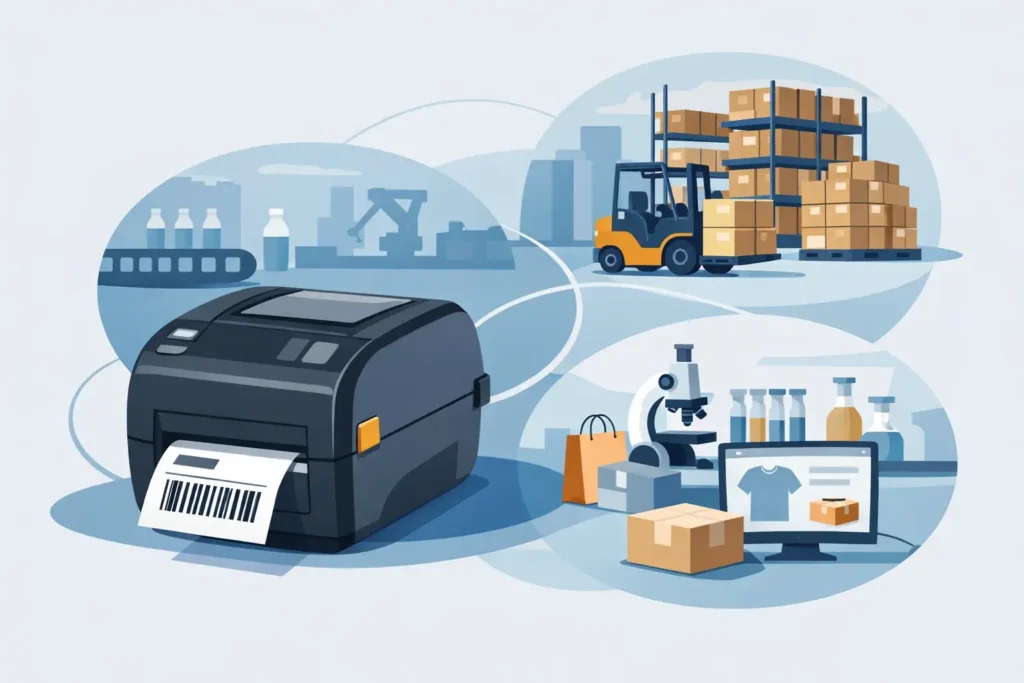
If your operation needs a label that lasts longer than paper but does not require the cost of a heavy-duty polyester construction, Zebra PolyPro 3000 T often strikes a good balance. It is a thermal-transfer polypropylene label material designed for applications where moisture, scuff resistance, and readable barcodes matter, but extreme chemical or heat exposure is not the primary concern.
That middle ground is exactly where many labeling decisions get difficult. Operations teams are rarely choosing between a perfect option and a bad one. More often, they are balancing print performance, durability, adhesive behavior, scanner reliability, and total cost across warehouses, production lines, and shipping environments. A material like this can be a strong fit, but only when it is matched to the real use case.
What Zebra PolyPro 3000T is designed to do
Zebra PolyPro 3000T is a thermal-transfer polypropylene label stock designed for organizations that need greater durability than standard paper labels can offer. Polypropylene gives the face stock better resistance to water, abrasion, and general handling. When paired with the right ribbon and printer settings, it can produce sharp text, barcodes, and variable data that hold up well in day-to-day operational environments. See our complete line of wax/resin thermal transfer ribbons.
For many businesses, that makes it a practical choice for product identification, shelf and bin labeling, work-in-process labels, inventory labels, and certain asset-tracking applications. It is especially useful when labels may be subject to rubbing, light moisture, or repeated handling that would quickly degrade a paper label.
The key point is that polypropylene is not trying to be polyester. It fills a different role. If your labels need to withstand extended outdoor exposure, aggressive solvents, or very high heat, you may need a more specialized construction. But if your challenge is more common – labels smearing in transit, curling in storage, or failing too soon in warehouse handling – polypropylene may be the right step up.
Where Zebra PolyPro 3000T makes operational sense
The best applications for this material are usually in controlled or semi-controlled environments that are still demanding enough to expose the limits of paper labels. Warehouses are a common example. Inventory labels on cartons, totes, bins, and shelving often need to stay legible through movement, scanning, and routine contact. A synthetic label can improve lifespan without forcing the operation into a much more expensive specification than it actually needs.
Manufacturing environments can also benefit, particularly for work-in-process labeling. If parts, subassemblies, or containers move through multiple stations, labels need to remain readable through handling and temporary storage. Zebra PolyPro 3000T can support that kind of workflow if the surface is compatible and the exposure conditions stay within the material’s intended range.
Retail backroom, healthcare supply, and distribution operations may also find it useful for labels that need a clean appearance and dependable barcode performance. In these cases, the value is not only durability. Consistency matters just as much. A label that scans reliably from receiving through picking and shipping reduces exceptions, rework, and manual intervention. We carry over 50 stock label sizes in the Zebra PolyPro 3000T. If you need a label size not in our online catalog, give us a call at 888.972.5234; we can manufacture any size or shape for your application with permanent or removable adhesive.
Zebra PolyPro 3000T vs paper labels
The biggest advantage over paper is durability. Paper labels are cost-effective and work well for many short-life applications, but they are more vulnerable to tearing, smudging, and surface wear. If a barcode becomes unreadable halfway through your process, the low unit cost no longer looks like a savings.
Polypropylene offers better resistance to moisture and abrasion, which can translate to longer service life and fewer replacement labels. It also tends to provide a more polished appearance, which can matter for customer-facing packaging or products that move through multiple handling points.
That said, paper is still the better choice for some operations. If labels are short-term, kept dry, and not handled much, a paper construction may be fully adequate and more economical. Upgrading every label in the building to polypropylene is not always the smartest move. The better approach is to match material performance to label lifespan and environmental exposure.
Zebra PolyPro 3000T vs polyester labels
This is where expectations need to stay realistic. Polyester is generally the stronger option for harsh environments, especially when you need high tear resistance, stronger chemical resistance, or better long-term performance under demanding conditions. If your labels are exposed to industrial cleaners, outdoor weather, or rough surfaces, polyester may be the safer specification.
Zebra PolyPro 3000T can be the better business decision when polyester would be overbuilt for the application. Many companies spend more than necessary because they standardize on the most durable material available rather than the most appropriate one. That can raise consumable costs without meaningfully improving results.
The trade-off is straightforward. Polypropylene often gives you a good balance of durability and cost for indoor operational labeling. Polyester is the material to consider when failure is expensive, and the environment is consistently unforgiving.
What affects performance more than the label itself
A label material never works in isolation. Print quality, durability, and adhesion depend on the full system – printer, ribbon, label construction, application surface, and environment. That matters with Zebra PolyPro 3000T as much as with any other synthetic stock.
Ribbon selection is a major factor. Thermal transfer polypropylene labels typically require a ribbon that bonds properly to the surface and resists scratching or smearing to the level your application demands. Choosing a ribbon based solely on price can result in poor image durability, even if the label stock itself is a good fit.
Printer setup matters too. Darkness, speed, pressure, and calibration affect barcode clarity and overall image quality. If the print is too light, scanners struggle. If the settings are too aggressive, you can create unnecessary wear on printheads or produce inconsistent output. Operations teams often blame the label first when the issue is really a setup problem.
Surface application is another common variable. Even a capable label can underperform if it is applied to a dirty, oily, textured, or curved surface that does not support the adhesive. Before standardizing on any material, it is worth testing it on the actual substrate and workflow.
Questions to ask before you standardize
Before selecting Zebra PolyPro 3000T for broad use, start with a few practical questions. How long does the label need to last? What kind of handling will it experience? Will it be exposed to moisture, cold storage, or chemical contact? Is the surface smooth, corrugated, plastic, metal, or something more difficult? Will the barcode be scanned once or dozens of times?
These questions may sound basic, but they can reveal whether you need a paper label, a polypropylene label, or a more specialized synthetic option. They also help determine whether a single stock can cover multiple departments or whether your operation needs separate specifications for shipping, inventory, and production.
This is also where implementation support becomes valuable. A material that looks right on a data sheet may still fail in practice if the adhesive is wrong, the ribbon is mismatched, or the printer fleet is not configured consistently across locations.
Common mistakes when evaluating Zebra Polypro 3000T
One mistake is assuming all synthetic labels perform the same. They do not. Face stock, adhesive, coating, and ribbon compatibility all influence results. Another is testing only for print quality and not for lifespan. A barcode that scans perfectly on day one may not survive the week if the environment is rough enough.
A third mistake is evaluating labels outside of the full workflow. For example, a label may look fine after printing but fail after products are stacked, shrink wrapped, refrigerated, or moved through a busy warehouse. Real-world testing should reflect actual handling conditions, not just lab-like samples on a bench.
For organizations managing multiple labeling points, consistency should also be part of the decision. A material that performs well in one printer but inconsistently across the fleet can create hidden costs in support time, operator intervention, and waste. That is why many businesses work with a partner such as PaladinID to evaluate the complete labeling system, not just the roll of labels. See our complete line of Zebra thermal transfer printers.
Is Zebra Polypro 3000T the right choice?
For many indoor industrial and warehouse applications, the answer is yes – provided the label needs more durability than paper and less extreme performance than polyester. It can be a smart fit for operations that want dependable barcode readability, cleaner appearance, and better resistance to everyday wear without overspending on a harsher-environment construction.
The right answer still depends on your surfaces, exposure conditions, printer setup, and expected label life. A good label decision is rarely about picking the most durable material on paper. It is about choosing the material that performs reliably in your process, with the fewest interruptions and the best long-term value.
If you are evaluating Zebra PolyPro 3000T, the best next step is not guessing from a spec sheet. It tests the material as part of your actual labeling workflow, so the label you approve is the one your operation can depend on every day.
At PaladinID, we understand that every labeling application is different.
That’s why companies across the country trust us to help them identify the right solution for their business. With over 40 years of experience and one of the industry’s largest selections of labeling products, we make it easy to find the right fit for your operation. Whether you need stock products or a custom-built solution, our team is ready to help. Visit our online catalog, Email us, or call us today at 888.972.5234.
PaladinID delivers label solutions that stick!


Got Labeling Questions? Our AI Assistant Has Answers - Chat Now!
For more information on PaladinID
Get Help With Your Next Label Project
We have over 35 years of providing exceptional service and labeling products to the world. Take the first step to an easy, stress-free solution for your label needs by contacting us.
Schedule a call below or email [email protected]
Make Your Mark
“Making companies more competitive by offering the correct label printing solution, on time, within budget, while creating unmatched value”.
About PaladinID, LLC
PaladinID develops and supports high-performance barcode labeling applications. We work with our clients to “Make Your Mark” by providing the expertise and tools necessary to create an entire product label printing solution. Located in central New Hampshire, PaladinID has been serving Massachusetts, Vermont, Maine, Connecticut, Rhode Island, New England, and beyond for over 30 years, and in 2017, became an RFID-certified company. We look forward to working with you.
You may be interested in our other services:
Product Labels
Product Labels
Labels for every type of application: Blank, Pre-printed, Variable data
Label Printers
Label Printers
We sell and support: Direct/thermal transfer, Inkjet, Laser
Printer Ribbons
Printer Ribbons
We sell ribbons for ALL barcode printers including: Zebra, Datamax, Sato, Intermec
Flexible Packaging
Flexible Packaging
We offer a wide variety of packaging containers for your products.
Label Software
Label Software
Software for all barcode printing and product labeling.
Label applicators
Label Applicators
Wide selection of applicators: Desktop/Mobile, Applicator only, Print & apply
