
How Durable Asset Labels Prevent Costly Loss


What Can We Help You With?
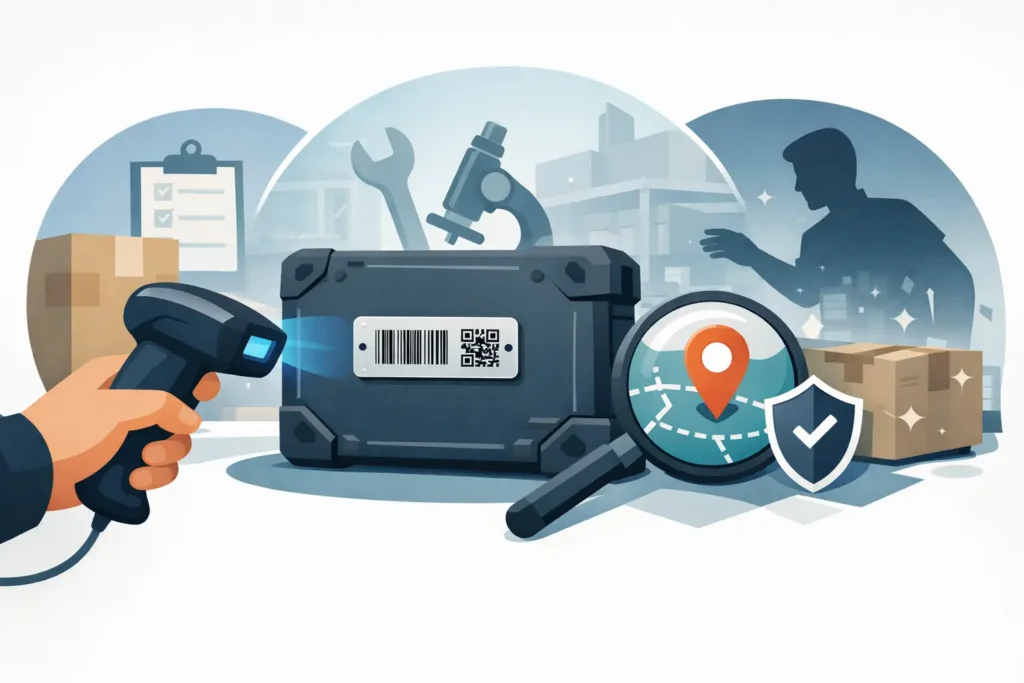
A missing barcode on a forklift battery, an unreadable serial label on a test instrument, a faded tag on a rental asset – small labeling failures create expensive operational problems. Durable asset labels are designed to prevent that breakdown by keeping identification readable, scannable, and attached through daily wear, cleaning, weather, and handling.
For operations teams, asset labels are not just stickers. They support inventory control, maintenance history, ownership tracking, audit readiness, and replacement planning. When labels fail early, the cost shows up in manual workarounds, lost time, duplicate records, and avoidable equipment replacement. That is why label durability has to be matched to the real operating environment, not assumed from appearance alone.
What durable asset labels actually need to do
A durable asset label has one job on paper – identify an item over time. In practice, it usually has several jobs at once. It may need to carry a barcode or QR code for scanning, a human-readable asset number, a serial number, a company name, warning text, or service instructions. It also has to stay in place on surfaces that are not always ideal, including textured metal, powder-coated equipment, plastic housings, curved tools, and outdoor machinery.
The right label construction depends on what the asset will face. In a clean indoor office, basic materials may be enough. In a warehouse, manufacturing plant, lab, utility setting, or rental operation, that changes quickly. Abrasion, oils, cleaners, sunlight, moisture, temperature shifts, and repeated contact can all reduce label life. If the barcode fades or the face stock tears, the asset is still there but the system around it starts to fail.
This is why durability should be treated as a performance requirement, not a cosmetic preference. A label that looks acceptable on day one but fails in six months creates more disruption than a higher-grade label that lasts for the life of the equipment.
Where durable asset labels make the biggest difference
The need for durable asset labels is strongest anywhere equipment moves, gets cleaned, or sees heavy use. Warehouses are a clear example. Mobile devices, carts, racks, forklifts, and IT hardware are frequently scanned and frequently touched. Labels in these environments need strong adhesion and clear print quality that holds up under friction and routine handling.
Manufacturing adds another layer. Equipment may be exposed to heat, dust, chemicals, or washdowns. Asset labels on machines, fixtures, and tools must remain legible even when production conditions are not forgiving. A failed label on a tool crib item may seem minor until the tool cannot be assigned, inspected, or returned accurately.
Healthcare and lab environments have their own demands. Labels may need to withstand disinfectants, frequent cleaning, and strict tracking processes. In utilities or field service applications, outdoor exposure becomes a deciding factor. UV resistance, moisture resistance, and adhesive performance across temperature swings matter more than the initial print appearance.
Rental businesses, auto auction operations, and multi-site organizations often face a different challenge – repeated transfer, movement, and chain-of-custody tracking. In these cases, labels must survive transport, handling, and repeated scans without peeling or becoming unreadable. The label is often the fastest way to verify what an asset is, where it belongs, and whether it is in service.
Material and adhesive choices matter more than most buyers expect
When buyers evaluate asset labels, they often start with size, barcode symbology, and numbering format. Those are important, but the choice of material and adhesive usually determines whether the label succeeds in the long term.
Polyester is a common option for durable asset identification because it offers good resistance to tearing, abrasion, and many environmental stresses. Metalized polyester can also provide a more permanent, high-value appearance for serialized equipment. For especially demanding applications, more specialized constructions may be needed to handle chemicals, outdoor exposure, or aggressive cleaning routines.
Adhesive selection is just as important. A strong permanent adhesive may work well on smooth metal but perform poorly on low-surface-energy plastics or rough powder-coated equipment. Some assets have oily surfaces, some have slight texture, and some are applied in less-than-ideal temperatures. If the adhesive is wrong, even a high-quality face stock will not stay in place.
That is where application testing becomes essential. There is no single best label for every asset category. The right construction depends on surface type, exposure conditions, expected lifespan, and whether tamper evidence or removal resistance is needed. A label used on indoor laptops is not the same label that belongs on outdoor utility assets or industrial shop equipment.
Print method affects label life too
A durable material still needs a durable image. If the barcode or text fades, scratches off, or smears, the label has failed even if it remains attached.
Thermal transfer printing is often the preferred method for asset labels because it produces a more durable printed image than direct thermal for long-term identification. But the ribbon matters. Resin and wax-resin ribbons are chosen based on the material and exposure conditions. The wrong ribbon can lead to poor resistance to abrasion or chemicals, even when the label stock itself is correct.
Printer settings also play a role. Heat, speed, and printhead condition affect barcode clarity and consistency. In high-volume operations, unreadable asset labels are sometimes traced back not to the label material, but to poor calibration, mismatched media, or worn printheads. A durable labeling system is not just the label. It is the label, ribbon, printer, software, and setup working together.
Common failure points to watch before you order
Most asset label problems are predictable. The issue is that they often show up after rollout, when re-labeling thousands of items becomes expensive.
One common problem is underestimating surface conditions. Labels applied to dusty, oily, or uneven equipment may appear secure at first, then lift at the edges over time. Another is specifying a label based on indoor storage conditions instead of actual field use. Equipment may move between warehouses, trucks, yards, and customer locations, exposing labels to conditions that were never considered in purchasing.
Barcode density can also create problems. Buyers sometimes try to place too much data on a small label, which reduces scan reliability once the asset gets scratched or dirty. In other cases, the human-readable text is too small for practical use in the field. Good asset labeling balances data capacity with real-world usability.
There is also the question of permanence. Some organizations need labels that resist tampering and cannot be removed cleanly. Others need labels that stay durable but can still be replaced during refurbishment or reassignment. Those are different requirements, and choosing the wrong one creates avoidable labor later.
How to choose durable asset labels for your operation
The best place to start is with the asset itself and the environment around it. What surface is the label being applied to? How long does it need to remain readable? Will it be scanned daily or only during audits? Will it face chemicals, weather, abrasion, or regular cleaning? Will the asset stay in one facility or move across multiple sites?
From there, it makes sense to think in systems, not individual components. Label material, adhesive, print technology, barcode format, software integration, and replacement workflow should be aligned. That is especially important for organizations standardizing identification across departments or locations. A label that works well in one building but fails in another creates inconsistency that undermines the tracking process.
Testing is worth the time. A short trial on actual equipment in actual conditions is far more valuable than selecting based on a data sheet alone. That approach helps procurement teams avoid overbuying for simple indoor applications while also preventing under-specification in harsher environments.
For companies managing large or mixed fleets of assets, consultative support can make a meaningful difference. PaladinID often works with organizations that do not just need a label product – they need a practical, repeatable labeling process that holds up in day-to-day operations.
Durable asset labels support more than identification
When asset labels perform consistently, the benefit extends beyond tracking. Maintenance teams can scan equipment quickly and trust the record. Warehouse staff spend less time manually verifying IDs. Procurement gets better visibility into asset life and replacement timing. Compliance and audit processes become easier because identification remains consistent over time.
That is the real value. Durable asset labels reduce friction in the workflows that depend on clear, persistent identification. They help protect data quality as much as they protect the physical label.
If your current labels are peeling, fading, or failing to scan, the problem is rarely just the label itself. It is usually a sign that the application needs a better-matched material, print method, or implementation approach. Fix that early, and asset tracking becomes a lot easier to trust.
At PaladinID, we understand that every labeling application is different.
That’s why companies across the country trust us to help them identify the right solution for their business. With over 40 years of experience and one of the industry’s largest selections of labeling products, we make it easy to find the right fit for your operation. Whether you need stock products or a custom-built solution, our team is ready to help. Visit our online catalog, Email us, or call us today at 888.972.5234.
PaladinID delivers label solutions that stick!


Got Labeling Questions? Our AI Assistant Has Answers - Chat Now!
For more information on PaladinID
Get Help With Your Next Label Project
We have over 35 years of providing exceptional service and labeling products to the world. Take the first step to an easy, stress-free solution for your label needs by contacting us.
Schedule a call below or email [email protected]
Make Your Mark
“Making companies more competitive by offering the correct label printing solution, on time, within budget, while creating unmatched value”.
About PaladinID, LLC
PaladinID develops and supports high-performance barcode labeling applications. We work with our clients to “Make Your Mark” by providing the expertise and tools necessary to create an entire product label printing solution. Located in central New Hampshire, PaladinID has been serving Massachusetts, Vermont, Maine, Connecticut, Rhode Island, New England, and beyond for over 30 years, and in 2017, became an RFID-certified company. We look forward to working with you.
You may be interested in our other services:
Product Labels
Product Labels
Labels for every type of application: Blank, Pre-printed, Variable data
Label Printers
Label Printers
We sell and support: Direct/thermal transfer, Inkjet, Laser
Printer Ribbons
Printer Ribbons
We sell ribbons for ALL barcode printers including: Zebra, Datamax, Sato, Intermec
Flexible Packaging
Flexible Packaging
We offer a wide variety of packaging containers for your products.
Label Software
Label Software
Software for all barcode printing and product labeling.
Label applicators
Label Applicators
Wide selection of applicators: Desktop/Mobile, Applicator only, Print & apply
