
Choosing Inkjet Product Labels That Perform


What Can We Help You With?
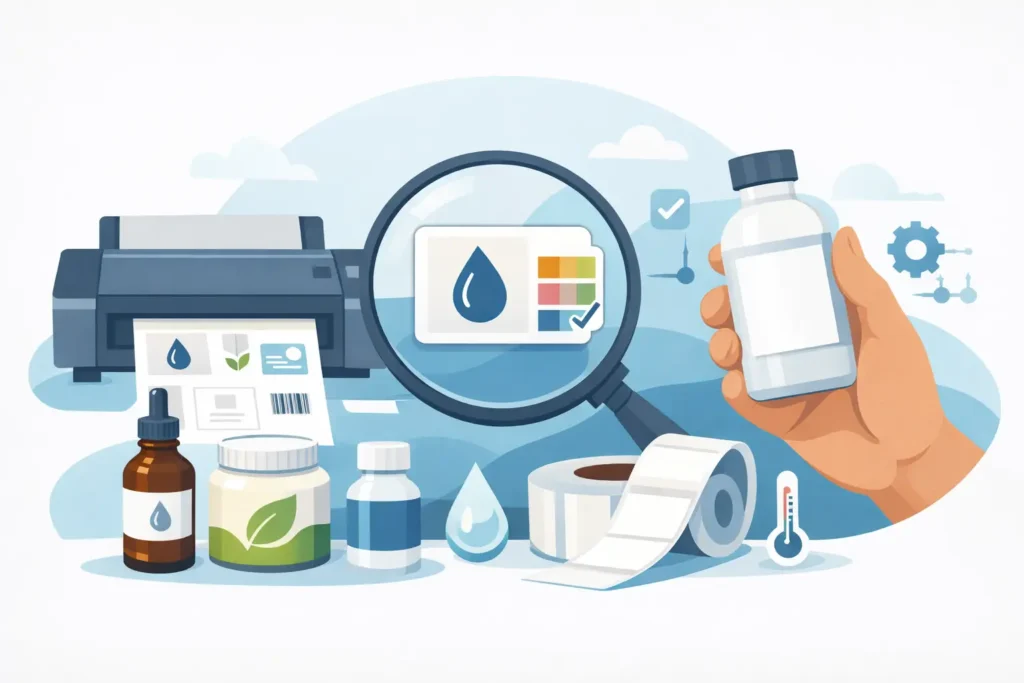
A product label can look sharp coming off the printer and still fail where it counts – on the shelf, in transit, or in a warehouse aisle. That is the real challenge with inkjet product labels. For operations teams, purchasing managers, and packaging decision-makers, the question is not just whether inkjet can print a label. It is whether the label stock, adhesive, ink interaction, and application environment will support reliable performance once that label is in use.
Inkjet labeling has a clear place in business operations. It works well for short runs, variable data, color-rich branding, and fast changeovers. But the choice of material matters more than many buyers expect. A label that performs in an office or controlled packing area may not hold up in production, refrigerated storage, or outdoor handling. That is why selecting inkjet labels should start with the application, not the printer alone.
Where inkjet product labels make sense
Inkjet product labels are often a practical fit for businesses that need flexibility. If you are printing product names, batch data, barcodes, expiration dates, or seasonal packaging in smaller quantities, inkjet can reduce preprinted inventory and speed up changes. This is especially useful for companies managing many SKUs or frequent artwork updates.
They also make sense when color matters. Brand-driven packaging, retail product identification, and consumer-facing labels often benefit from the image quality inkjet systems can produce. In these settings, inkjet can support a more professional presentation without committing every variation to a large commercial print run.
That said, print quality alone does not define success. In operational environments, labels also need to feed consistently, apply cleanly, and remain readable after handling. A well-printed label that smears, curls, or lifts at the corners creates avoidable rework.
What to evaluate before you buy
The best label choice usually comes down to four variables: surface, environment, data requirements, and workflow. Each one affects how well an inkjet label system performs.
Label face stock and ink compatibility
Inkjet printing depends on the facestock properly accepting ink. Some stocks are coated to improve dry time, color density, and image clarity. Others are built for more basic applications where appearance matters less than cost. If the coating is wrong for the printer or ink set, you may see feathering, slow drying, or poor barcode edge definition.
Inkjet paper labels are commonly used for dry, indoor applications and can be cost-effective for packaging that does not face rough handling. Film materials such as polyester or polypropylene are a better fit when moisture resistance, tear resistance, or longer life is required. The trade-off is usually price and, in some cases, printer-specific compatibility.
Adhesive performance in real conditions
Adhesive selection is often underestimated. A label can print perfectly and still fail because the adhesive is wrong for the container, temperature, or surface condition. Corrugated, glass, plastic, metal, and flexible packaging all behave differently. So do cleanroom conditions versus dusty production areas.
Permanent adhesive is common, but not all permanent adhesives perform the same way. Some are designed for cold application, some for high tack on difficult surfaces, and some for clean removability. If your products move through refrigeration, freezers, or warm-fill operations, adhesive testing should be part of the decision.
Durability and handling exposure
Not every product label needs industrial-grade durability, but many do need more than basic office media can provide. If labels are exposed to abrasion, water, chemicals, UV light, or repeated handling, the combined performance of face stock and ink becomes critical.
This is where expectations need to be realistic. Inkjet can be an excellent fit, but it is not automatically the right answer for every harsh environment. In some applications, a thermal transfer or specialty durable label solution may offer better long-term reliability. The right choice depends on the label’s life and the conditions it must withstand.
Barcode and variable data requirements
Many businesses use inkjet labels for more than branding. They also need readable barcodes, lot codes, serial numbers, QR codes, or regulatory data. That raises the bar on print consistency. A barcode that scans well at the point of printing but degrades after exposure to moisture or surface rubbing can disrupt inventory accuracy and shipping workflows.
For that reason, barcode verification and field testing matter. It is not enough to confirm that the code looks acceptable at first glance. The label should support the scan performance your workflow requires, whether it is used in a warehouse, on a production line, or at receiving.
Common use cases for inkjet product labels
In packaging operations, inkjet is often used for primary product labels, short-run promotional labels, or private label packaging where flexibility matters. It can also work well for compliance-driven labels that change often, such as ingredient statements, warning information, or batch-specific data.
In warehouse and distribution settings, the fit is more selective. Inkjet labels can support carton identification, color-coded workflow labels, and some inventory applications, particularly in controlled conditions. But for rack labels, outdoor storage, or long-term asset identification, more durable print technologies may be the better route.
Manufacturers with mixed labeling needs often benefit from using inkjet for presentation-focused product labeling while relying on other systems for harsh-environment tracking and internal logistics. That kind of split approach is often more effective than forcing one print method to cover every need.
Why the printer is only part of the system
A common mistake is treating inkjet labeling as a printer purchase rather than a process decision. Labels, adhesives, ink, software, data inputs, and application methods all affect results. Even the best media can underperform if the printer settings are off or the label design does not match the application.
This is especially true when variable data is involved. If your team is pulling product information from an ERP, WMS, or a manual spreadsheet process, the label system needs to ensure accuracy and print quality. A strong label setup reduces relabeling, manual intervention, and scan failures.
For buyers comparing options, the practical question is not just, “Which label stock works?” It is, “Which combination will perform consistently in our environment and fit our workflow without creating downstream problems?”
How to choose the right inkjet product labels
Start with the end use. Define where the label will be applied, how long it must remain legible, which surfaces it will adhere to, and the conditions it will face. That includes temperature shifts, moisture, friction, chemicals, and storage time.
Next, identify the data requirements. If the label includes barcodes, serialized information, or compliance content, print reliability matters as much as appearance. If branding is the priority, then color performance and finish may carry more weight.
Then look at production realities. Short runs, frequent label changes, and multiple SKUs often support the business case for inkjet. High-volume operations with standardized labeling may benefit from a different setup, especially if speed and durability are more important than color flexibility.
Finally, test before standardizing. Sample rolls and trial runs can reveal issues that do not show up on a spec sheet. Smear resistance, adhesion, scan performance, and curing behavior should all be evaluated under actual operating conditions.
The value of application support
For many organizations, the hard part is not finding inkjet-compatible media. It is narrowing the choices to the combination that fits their business. That is where consultative support makes a difference. A supplier that understands labeling systems can help prevent mismatched materials, poor adhesive choices, or avoidable compatibility issues.
PaladinID works with businesses that need more than a box of labels. In complex operations, the label stock must align with printers, software, barcode requirements, and the environment in which the label will be used. That kind of alignment reduces trial and error and helps teams build a labeling process that remains reliable as production changes.
Inkjet product labels can be a strong solution when flexibility, color, and variable data matter. The key is to treat them as part of a larger identification system, not as a simple office-supply purchase. When the material, adhesive, print method, and workflow are matched correctly, labels do more than look good – they support accuracy, speed, and confidence across the operation.
If your team is evaluating label options, the best next step is to test with the real container, the real printer, and the real conditions your operation deals with every day.
At PaladinID, we understand that every labeling application is different.
That’s why companies across the country trust us to help them identify the right solution for their business. With over 40 years of experience and one of the industry’s largest selections of labeling products, we make it easy to find the right fit for your operation. Whether you need stock products or a custom-built solution, our team is ready to help. Visit our online catalog, Email us, or call us today at 888.972.5234.
PaladinID delivers label solutions that stick!


Got Labeling Questions? Our AI Assistant Has Answers - Chat Now!
For more information on PaladinID
Get Help With Your Next Label Project
We have over 35 years of providing exceptional service and labeling products to the world. Take the first step to an easy, stress-free solution for your label needs by contacting us.
Schedule a call below or email [email protected]
Make Your Mark
“Making companies more competitive by offering the correct label printing solution, on time, within budget, while creating unmatched value”.
About PaladinID, LLC
PaladinID develops and supports high-performance barcode labeling applications. We work with our clients to “Make Your Mark” by providing the expertise and tools necessary to create an entire product label printing solution. Located in central New Hampshire, PaladinID has been serving Massachusetts, Vermont, Maine, Connecticut, Rhode Island, New England, and beyond for over 30 years, and in 2017, became an RFID-certified company. We look forward to working with you.
You may be interested in our other services:
Product Labels
Product Labels
Labels for every type of application: Blank, Pre-printed, Variable data
Label Printers
Label Printers
We sell and support: Direct/thermal transfer, Inkjet, Laser
Printer Ribbons
Printer Ribbons
We sell ribbons for ALL barcode printers including: Zebra, Datamax, Sato, Intermec
Flexible Packaging
Flexible Packaging
We offer a wide variety of packaging containers for your products.
Label Software
Label Software
Software for all barcode printing and product labeling.
Label applicators
Label Applicators
Wide selection of applicators: Desktop/Mobile, Applicator only, Print & apply
