
Inventory Control Labeling Solutions That Work




What Can We Help You With?
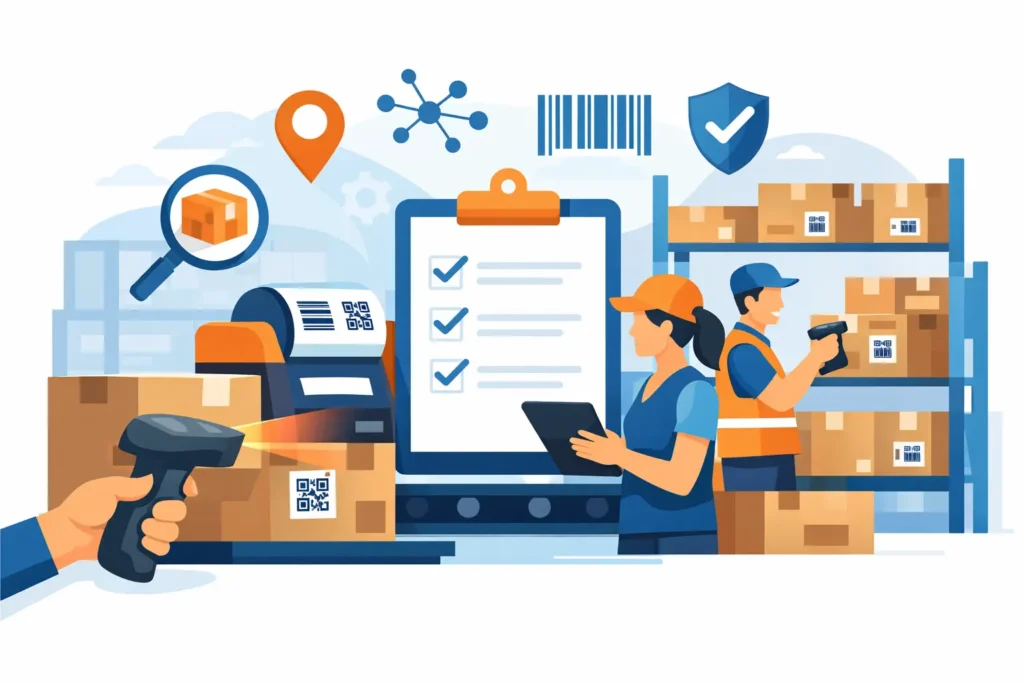
A missed scan at receiving can throw off replenishment, delay picks, and create hours of avoidable research. In most facilities, inventory control labeling solutions are not just about putting barcodes on shelves or cartons. They are part of the operating system that keeps the product moving accurately through storage, production, fulfillment, and audit cycles.
That is why labeling decisions deserve more attention than they often get. When teams treat labels as a commodity purchase, they usually end up troubleshooting preventable issues later – barcode failures, poor adhesive performance, mismatched printer settings, inconsistent data, or labels that simply do not fit the workflow. Effective inventory control starts when the labeling system is built around the environment, the process, and the data that needs to move with the product.
What inventory control labeling solutions actually need to solve
At a basic level, inventory labels identify items, locations, pallets, bins, assets, or work in process. In practice, they also need to support speed, accuracy, and consistency across multiple touchpoints. A warehouse team may need durable rack labels that scan from a forklift. A manufacturing operation may need product labels with variable data tied to lot numbers or work orders. A healthcare or life sciences environment may need traceability and strict print consistency. The right answer depends on the operation.
That is the first trade-off to understand. There is no single label material, printer, or barcode format that fits every inventory process. The best solution is usually a coordinated combination of media, hardware, software, and print standards that reflects how the operation actually runs.
Why disconnected labeling systems create inventory problems
Many inventory issues trace back to a fragmented setup. Labels come from one source, printers from another, software from somewhere else, and no one is responsible for how the system performs as a whole. On paper, each component may be acceptable. On the floor, the gaps show up quickly.
A label stock may not be suited for cold storage or outdoor exposure. A ribbon may not match the face stock. Printheads may wear faster because settings are off or supplies are poor quality. Barcode sizing may be too small for the scanner distance. Variable data formats may be inconsistent across departments. None of these failures look major on their own, but together they introduce friction into inventory control.
That friction becomes expensive. Workers spend extra time rescanning labels, relabeling products, correcting records, and verifying stock by hand. Supervisors lose confidence in inventory data. Procurement may believe the problem is labor-related when the real issue is identification reliability.
Core components of reliable inventory control labeling solutions
Strong inventory control labeling solutions are built as systems, not as isolated products. The label itself matters, but so do the printer, ribbon, software, and the rules behind what gets printed.
Label material should match the use case. Paper labels may work well for short-life indoor applications, but they are often ill-suited to moisture, abrasion, chemicals, UV exposure, or extended storage. Synthetic materials can deliver better durability, though they may cost more upfront. That cost difference is often justified when relabeling, scan failures, and replacement labor are taken into account.
Printer selection matters just as much. Desktop printers may be sufficient for lower-volume areas, while industrial printers are better suited for continuous production, warehouse throughput, and demanding conditions. If labeling is mission-critical, print reliability and serviceability should carry more weight than entry price alone.
Ribbons and printheads are frequently overlooked, yet they directly affect print quality and uptime. A well-matched ribbon improves image durability and barcode readability. A poor match can create fading, smearing, or premature component wear. Over time, those issues undermine scan accuracy and increase maintenance costs.
Software is where standardization happens. Labeling software helps control templates, variable fields, barcode types, and user permissions. It also makes it easier to connect labeling to ERP, WMS, MES, or other business systems. Without that connection, teams often rely on manual data entry, which increases the chance of duplication, formatting errors, and mislabeled inventory.
Matching the label strategy to the workflow
The most effective approach starts with process mapping. Where does inventory enter the operation? Where is it relabeled, moved, consumed, counted, or shipped? Which users print labels, and from what systems? What scanners are in use, and at what distance? These questions shape better decisions than choosing materials from a catalog alone.
For example, location labeling and product labeling are related but not identical needs. Rack and bin labels must remain legible over time and scan consistently despite dust, traffic, and distance. Product labels may need different adhesives, data structures, or print frequencies. Trying to solve both with a single generic label often leads to compromises that hurt performance somewhere in the process.
The same is true for mobile and fixed printing environments. Some operations benefit from centralized print stations where labeling is controlled tightly. Others need on-demand printing at receiving, on the warehouse floor, or at packaging lines. A decentralized setup can improve speed, but only if templates, media, and device settings are standardized.
Inventory control labeling solutions in real operating environments
Warehouses tend to expose weaknesses quickly. High scan volumes, forklift traffic, dust, temperature swings, and constant movement put pressure on every part of the labeling system. In these settings, label placement and barcode size can be just as important as material selection. A technically correct label that is hard to scan in motion is still a process problem.
Manufacturing introduces another layer of complexity. Work-in-process labels may need to travel through heat, oils, or repeated handling. Finished goods labels may need lot codes, date information, or customer-specific formatting. If label printing cannot keep up with line speed or data changes, production slows down.
Healthcare, life sciences, and compliance-driven sectors often place a premium on traceability and consistency. In those environments, label quality is tied directly to risk control. Reprints, illegible barcodes, and inconsistent formats are not minor inconveniences. They create audit exposure and operational uncertainty.
This is where a consultative approach has real value. Companies such as PaladinID help organizations look beyond the label roll and evaluate the full identification workflow – from supply selection to printer configuration to long-term support.
What buyers should evaluate before making a change
If your team is reviewing an inventory labeling process, it helps to look at performance before product specs. Start with the operational issues that show up most often. Are scans failing at receiving? Are labels peeling in storage? Are operators using workarounds because printing is too slow or too limited? Are multiple departments creating labels differently for the same inventory stream?
From there, evaluate compatibility. The best label in isolation is still the wrong choice if it does not work with your printer fleet, software environment, scanner requirements, or data source. Likewise, a lower-cost printer can prove an expensive choice if it cannot meet the application’s duty cycle or media requirements.
Support should also be part of the decision. Implementation is where many projects succeed or stall. Template setup, printer calibration, ribbon matching, data integration, and user training all affect results. Buyers who choose a partner with technical depth often avoid the trial-and-error phase that slows adoption and drives rework.
The long-term value of getting labeling right
Good labeling infrastructure improves more than barcode readability. It supports faster receiving, cleaner cycle counts, more accurate picks, better traceability, and stronger confidence in inventory records. It also reduces the hidden labor that comes from exceptions – relabeling, rescanning, searching, correcting, and reconciling.
That does not mean every operation needs the most advanced hardware or the most expensive media. It means the system should be appropriate to the application, scalable for growth, and dependable under normal operating conditions. In some environments, a straightforward thermal transfer setup with durable stock labels is the right answer. In others, integrated forms, RFID, or more specialized materials may make better business sense.
The difference comes down to fit. Inventory control works best when labels are designed as part of the process, not added after the process is already struggling.
If your operation is still treating labeling as a small purchasing line item, that is often the first sign it deserves a closer look. A better labeling system does not just identify inventory. It gives your team a more dependable way to manage it every day.
At PaladinID, we understand that every labeling application is different.
That’s why companies across the country trust us to help them identify the right solution for their business. With over 40 years of experience and one of the industry’s largest selections of labeling products, we make it easy to find the right fit for your operation. Whether you need stock products or a custom-built solution, our team is ready to help. Visit our online catalog, Email us, or call us today at 888.972.5234.
PaladinID delivers label solutions that stick!


Got Labeling Questions? Our AI Assistant Has Answers - Chat Now!
For more information on PaladinID
Get Help With Your Next Label Project
We have over 35 years of providing exceptional service and labeling products to the world. Take the first step to an easy, stress-free solution for your label needs by contacting us.
Schedule a call below or email [email protected]
Make Your Mark
“Making companies more competitive by offering the correct label printing solution, on time, within budget, while creating unmatched value”.
About PaladinID, LLC
PaladinID develops and supports high-performance barcode labeling applications. We work with our clients to “Make Your Mark” by providing the expertise and tools necessary to create an entire product label printing solution. Located in central New Hampshire, PaladinID has been serving Massachusetts, Vermont, Maine, Connecticut, Rhode Island, New England, and beyond for over 30 years, and in 2017, became an RFID-certified company. We look forward to working with you.
You may be interested in our other services:
Product Labels
Product Labels
Labels for every type of application: Blank, Pre-printed, Variable data
Label Printers
Label Printers
We sell and support: Direct/thermal transfer, Inkjet, Laser
Printer Ribbons
Printer Ribbons
We sell ribbons for ALL barcode printers including: Zebra, Datamax, Sato, Intermec
Flexible Packaging
Flexible Packaging
We offer a wide variety of packaging containers for your products.
Label Software
Label Software
Software for all barcode printing and product labeling.
Label applicators
Label Applicators
Wide selection of applicators: Desktop/Mobile, Applicator only, Print & apply
